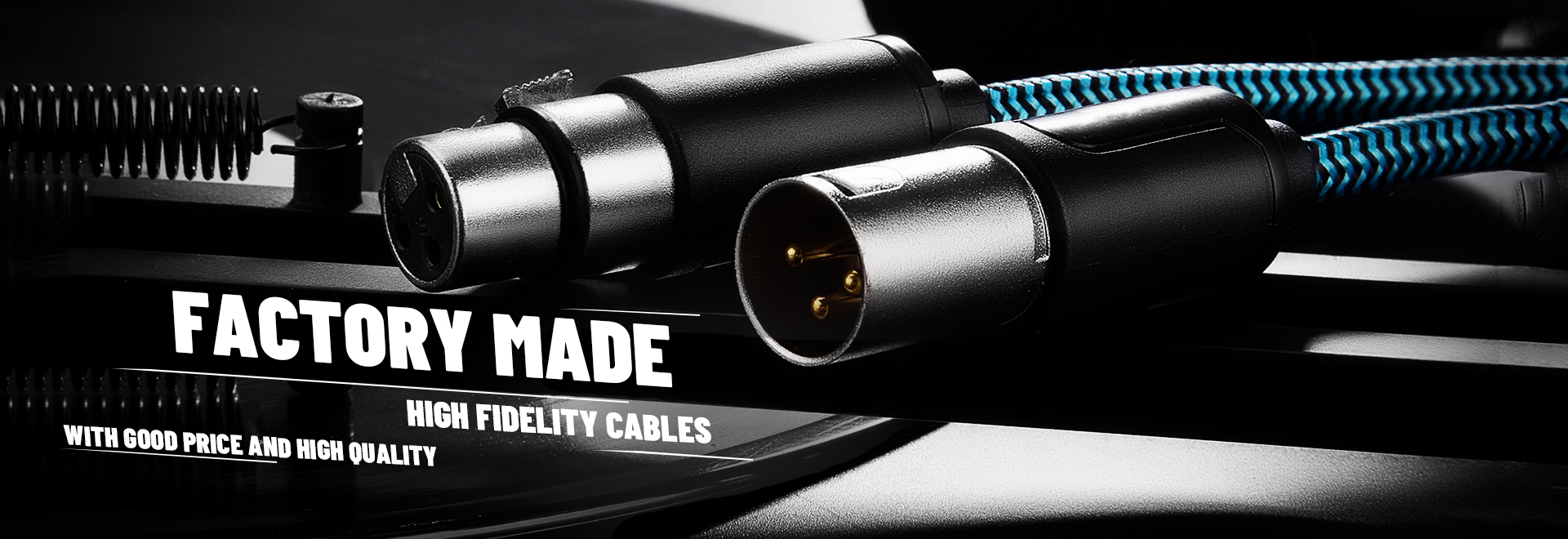
China Manufacturer 6.35mm TS Male to XLR Male Audio Cable
I’m a China Manufacturer who knows how important solid signal and rugged build are for pro sound. The 6.35mm TS Male to XLR Male Audio Cable I offer pairs a durable 3-core shielded design with high-purity copper conductors, giving clean, low-noise signal transfer between mixers, preamps and stage snakes. The 6.35mm TS plug fits standard unbalanced sources, while the XLR male ensures secure, professional termination. Flexible outer jacket, strain relief, and reinforced connectors resist daily stage or studio use. Available in bulk for custom lengths and color options, this cable meets the demands of studios, rental houses and live sound companies in China and overseas. I handle OEM/ODM and private labeling for bulk orders, with reliable lead times and competitive pricing. If you’re sourcing from a trusted manufacturer, I invite you to contact me for samples, pricing, and delivery details.


6.35mm TS Male to XLR Male Audio Cable Supplier Industry Leaders
Global buyers seeking 6.35mm TS male to XLR male cables value suppliers who deliver consistent quality and scalable production. These cables connect guitar or line outputs to balanced inputs on mixers, stage boxes, and interfaces. Leading manufacturers emphasize signal integrity, low noise, and durable terminations to withstand daily stage use and studio sessions. Expect rugged jackets, precise connector fits, and reliable joints that endure repeated plugging. When evaluating suppliers, examine conductor material, shielding, and TS to XLR compatibility. Look for oxygen-free copper, multi-layer shielding, and robust connector plating. Manufacturing should include rigorous testing (continuity, insulation, torque) and RoHS compliance with traceable lot numbers. Also ask about customization (lengths, finishes), lead times, MOQs, and global logistics to ensure on-time delivery for worldwide projects.
| Variant | Length (m) | Conductor Material | Shielding | Impedance (Ω) | Connector Type | Pin Configuration | Contact Plating | Max Voltage (V) | Temp Range (°C) | Country of Manufacture | Certification |
|---|---|---|---|---|---|---|---|---|---|---|---|
| A1 | 0.5 | OFC (Oxygen-Free Copper) | Foil + Braided | 110 | TS 6.35mm Male to XLR Male | XLR 1-2-3 | Gold over Nickel | 200 | -20 to 70 | China | RoHS, REACH |
| A2 | 1.0 | OFC | Braided | 110 | TS 6.35mm Male to XLR Male | XLR 1-2-3 | Gold over Nickel | 250 | -20 to 85 | Vietnam | RoHS, CE |
| A3 | 2.0 | OFC | Foil + Braided | 110 | TS 6.35mm Male to XLR Male | XLR 1-2-3 | Gold over Nickel | 300 | -25 to 75 | Malaysia | RoHS, CE, REACH |
| B1 | 3.0 | OFC | Braided | 120 | TS 6.35mm Male to XLR Male | XLR 1-2-3 | Gold over Nickel | 350 | -30 to 85 | China | RoHS |
| B2 | 5.0 | OFC | Foil + Braided | 110 | TS 6.35mm Male to XLR Male | XLR 1-2-3 | Gold over Nickel | 400 | -40 to 85 | Taiwan | CE, RoHS, REACH |
| C1 | 0.75 | OFC | Braided | 110 | TS 6.35mm Male to XLR Male | XLR 1-2-3 | Gold over Nickel | 180 | -15 to 75 | Japan | RoHS |
| D1 | 10.0 | OFC | Foil + Braided | 110 | TS 6.35mm Male to XLR Male | XLR 1-2-3 | Gold over Nickel | 600 | -20 to 70 | USA | CE, RoHS |
Related Products


6.35mm TS Male to XLR Male Audio Cable Factory Stands Out
Top Selling Products


- Related Blog
- Reviews
- Reviews